
In Memory of Academician Omar Keshelashvili
 With deep sorrow we bid farewell to a prominent Georgian scientist, Doctor of Economic Sciences, Professor, Academician of the Georgian Academy of Agricultural Sciences, author of numerous scientific works and textbooks, an esteemed educator, and a public figure — Mr. Omar Keshelashvili. His long and fruitful career constitutes an important and integral part of the history of the development of Georgian agrarian-economic science.
Omar Keshelashvili was born on August 14, 1941, into a family of researchers. His dedication to science was a natural continuation of a family tradition: his father was one of the founders and a prominent figure in Georgian agrobiological science, while his mother was a soil scientist. This environment shaped his professional choices and laid the foundation for the multifaceted scientific career that would later earn him widespread recognition. In 1963, he graduated with honors from the Faculty of Economics and Organization at the Agricultural Institute of Georgia. A young researcher distinguished by exceptional talent and determination, he earned the degree of Candidate of Economic Sciences in 1968, followed by the degree of Doctor of Economic Sciences in 1978. His doctoral thesis, which addressed the economic assessment of the "chemization" (chemical intensification) of agriculture, was notable for its high scientific merit and innovative approaches. By incorporating the potential of information technology, his work laid the foundation for a new direction in agrarian-economic research.
The scientific legacy of Academician Omar Keshelashvili was multifaceted and of substantial significance. Through his fundamental research, he laid the groundwork for new directions in Georgian agricultural-economic science. He was the first to develop a specialized computer program and methodology that enabled the assessment of the economic efficiency of using mineral fertilizers, herbicides, and plant protection products in agriculture, while accounting for the specific regional characteristics of Georgia.
A significant focus of his research involved determining the economic thresholds for the justification of measures to combat agricultural pests. He initiated the scientific study of managing operational risks on farms, defining the economic limits for justifiable risk-taking as well as optimal levels of return.
His contribution to the development of a zonal scheme for the production specialization of Georgia’s agricultural sector was of particular importance. Based on his research, in 2009, the country’s territory was divided into 13 zones and 8 sub-zones, categorized according to their specialization in the agro-industrial and food-processing sectors. This work has become an important foundation for the development of the country's agrarian sector, the consideration of regional specificities, and further scientific research.
Omar Keshelashvili’s life served as a shining example of dedication to science, knowledge, and social responsibility. He belonged to a generation of scholars for whom research was not merely a professional pursuit, but a contribution to the nation’s development and a responsibility toward future generations. His scholarly works, scientific initiatives, educational endeavors, and organizational talent left a significant mark on the field of agrarian economics in Georgia. His name and scientific legacy will endure in the memory of his colleagues, students, like-minded associates, and all those who had the opportunity to collaborate with him and gain knowledge from him. The work he accomplished continues to contribute to the development of Georgian agrarian science and economic thought.
With deep sorrow, we offer our condolences to his family, loved ones, colleagues, students, and the scientific community on this heavy loss.
Forester’s Day was celebrated at the Ministry of Environmental Protection and Agriculture
 On October 9, Minister of Environmental Protection and Agriculture Davit Songhulashvili congratulated foresters on their professional day and spoke about the importance of their daily labor and professional activities in the protection and sustainable management of forests. "Forestry reform has been underway in Georgia since 2013, with the primary goal of ensuring the sustainable management and restoration of Georgia’s forests, as well as the preservation of biodiversity. I am proud that, together with you, we have laid the foundation for unprecedented and comprehensive changes—the likes of which have never been seen before in the history of Georgia. This work is vital not only for our forests but also for the future of our society and our country. Achieving this goal would be impossible without the individuals who care for Georgia’s forests every single day—forest rangers, foresters, specialists, and scientists. I am delighted that, on this special day, I have the opportunity to honor those working in the forestry sector who have made significant professional contributions to the development of this field in our country.

For their successful work in the forestry sector over the years, representatives from the National Forestry Agency, the Agency of Protected Areas, the Department of Environmental Supervision, and the Forestry Agency of the Autonomous Republic of Adjara were presented with badges and monetary awards. Representatives from scientific and academic circles active in the field of forestry were also honored at the event.
In recognition of his exceptional contribution to forest protection and the development of the forestry sector, Academician Giorgi Gagoshidze, from the Georgian Academy of Agricultural Sciences, was awarded the title of "Distinguished Forester." Academician Lasha Dolidze was presented with the "Honorary Forester" badge.
Professional day of the forester in Georgia
 Foresters protect one of the country’s most vital natural assets—its forests—a role that underscores the unique responsibility and significance of this profession.
Forester’s Day has been observed in Georgia since 1999, with the aim of promoting the forestry profession and highlighting the importance of the forestry sector. On October 9 of this year, a thematic session dedicated to Forester’s Day was held in the meeting hall of the Georgian Academy of Agricultural Sciences, organized by the Academy’s Department of Environmental Protection and Forestry Sciences.
The session was attended by members of the Academy’s Department of Environmental Protection and Forestry Sciences, including: Academician-Secretary of the Department, Academician Lasha Dolidze; and Corresponding Member of the Academy, Giorgi Kavtaradze—who serves as the Acting Director of the V. Gulisashvili Forestry Institute and holds a doctorate in forestry. Zviad Tiginashvili, Associate Professor at the Faculty of Agricultural Sciences and Chemical Technologies of the Georgian Technical University and Doctor of Agricultural Sciences, was present, along with fourth-year students from the same faculty.
Gurjaani Wine Festival 2026
 This year, the 10th anniversary of the festival was celebrated and it was traditionally held in Gurjaani, Akhtali Park. The main message of the anniversary year was "modern heritage", which emphasized the 8000-year-old Georgian winemaking and the continuous connection between generations.
Gurjaani Wine Festival was attended by Prime Minister of Georgia Irakli Kobakhidze, Minister of Environment Protection and Agriculture Davit Songhulashvili and members of the government.
"I congratulate the Gurjaani Wine Festival on its 10th anniversary. Over the years, the festival has developed into an important tradition and has become an important space for Georgian winemakers, winegrowers and entrepreneurs to present their products, meet with customers and establish business relations. All this contributes to the development of their business. This year, more than 500 entrepreneurs are represented at the festival, which further emphasizes the scale and importance of the event. Festival It hosts a lot of Georgian and foreign guests and adds a special charm to Kakheti in the autumn period. This event once again presents the region's hospitality tradition and contributes to the development of wine tourism, the promotion of Georgian wine culture and the presentation of the country's tourism potential," said Davit Songhulashvili.
Gurjaani Wine Festival serves to popularize Georgian wine culture and traditions, develop winemaking and support local entrepreneurs. The event brought together winemakers and wine producers from different regions and gave the guests the opportunity to get to know the diversity of Georgian wine.
From the Academy of Agricultural Sciences of Georgia, Vice President of the Academy, Academician Guram Aleksidze and Deputy President of the Academy, Academician Anatoli Giorgadze participated in the event.
Congratulations
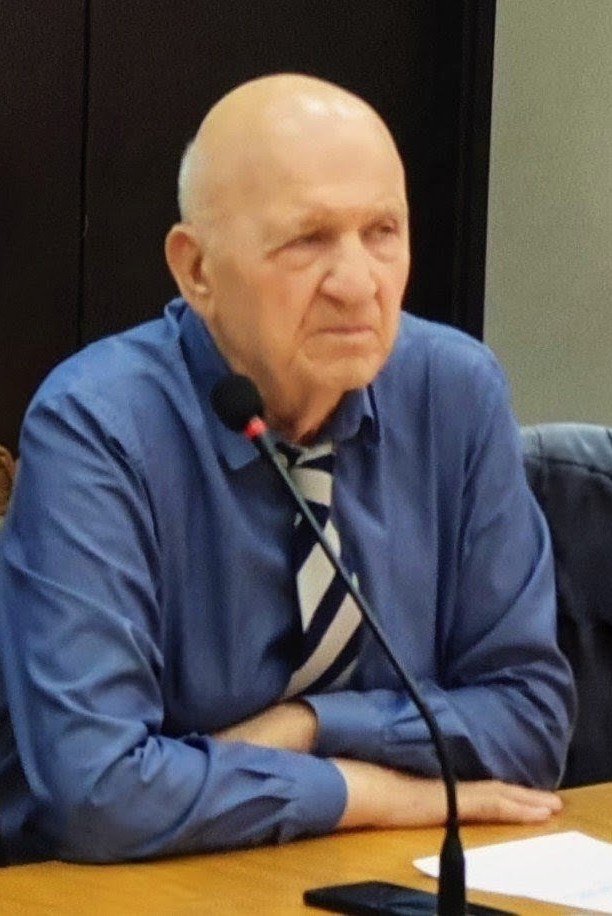 The Academy of Agricultural Sciences of Georgia cordially congratulates Academician-Secretary of the Academy's Food Safety and Food Technology Sciences Department, Academician Zurab Tskitishvili, on his awarding the title of "Knight of Sports".
The Academy wishes Mr. Zurab good health, long life and success in his scientific activities.
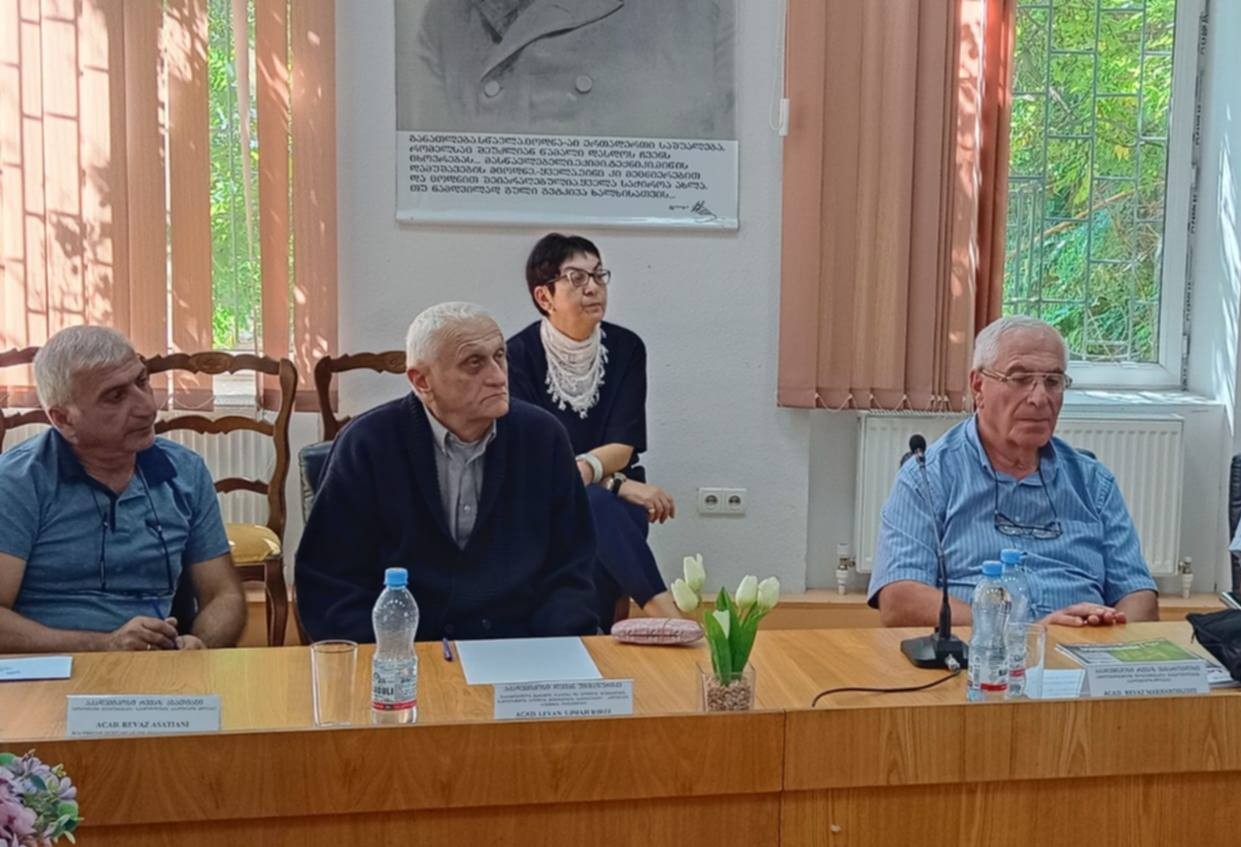
To the highly respected Academicians — Mr. Ramaz Khurodze, Mr. Vladimer Papava, Mr. Levan Japaridze, and Mr. Ramaz Khetsuriani:
On behalf of the Georgian Academy of Agricultural Sciences and the community of agrarian scientists, we extend our heartfelt congratulations on your being awarded the title of Honorary Citizen of Tbilisi.
This significant recognition serves not only as a worthy tribute to your long-standing scientific, academic, and public service but also as an acknowledgment of the exceptional contribution you have made to the advancement of Georgian science, education, and public discourse.
Your professional journey, scientific achievements, and intellectual legacy constitute a vital part of the Georgian academic landscape. Your work stands as an example of knowledge, professionalism, responsibility, and service to the country for many generations. The title of Honorary Citizen of Tbilisi holds special symbolic significance, as it reflects the respect the capital and society hold for individuals whose work has left a significant mark on our country’s cultural, scientific, and public life.
We wish you health, a long and creative life, continued success in your scientific endeavors, and fruitful work for the benefit of Georgia and Georgian science.
Round Table Dedicated to the 140th Anniversary of Leonarde Dekaprelevich
 On September 29 of this year, the Georgian Academy of Agricultural Sciences hosted a round table organized by the Department of Agronomic Sciences. The event was dedicated to the 140th anniversary of the birth of Leonarde Dekaprelevich—a prominent Georgian scientist, geneticist-breeder, botanist, Doctor of Agricultural Sciences, professor, Corresponding Member of the Georgian Academy of Sciences, and an academician and co-founder of the Georgian Academy of Agricultural Sciences. The roundtable was attended by: the Academy’s Chief Academician-Secretary, Academician Aleksandre Didebulidze; the Academician-Secretary of the Department of Agronomic Sciences, Academician Gogola Margvelashvili; Academicians Roland Kopaliani and Zaur Chankseliani; Corresponding Member Gizo Gogichaishvili; Scientific Secretaries of the science departments, Doctors Maia Peikrishvili and Giorgi Ghambashidze; and leading specialists Ketevan Chipashvili, Larisa Chaika, and Mariam Mosashvili. Invited guests—Doctor of Agricultural Sciences Tsotne Samadashvili and Doctor Gocha Tsereteli—also attended the roundtable.
The roundtable was opened by the Academician-Secretary of the Department of Agronomic Sciences, Academician Gogola Margvelashvili. She also delivered a comprehensive presentation on the life and scientific career of Leonarde Dekaprelevich. Emphasis was placed on L. Dekaprelevich’s contributions to the development of the country's agricultural science, specifically highlighting his work in plant genetics, breeding, field crop cultivation, seed production, and the study of cultivated plants. Particular attention was drawn to his efforts in studying endemic Georgian wheat varieties and highlighting their significance, as well as to his research, which encompassed the study and description of their biological and agronomic characteristics. Thanks to L. Dekaprelevich, Georgian wheat became known to the international scientific community, thereby laying a crucial foundation for recognizing Georgian wheat genetic resources as assets of global importance. Together with Nikolai Vavilov and Pyotr Zhukovsky, he scientifically substantiated that Georgia is one of the world's primary centers of origin for wheat.
L. Dekaprelevich held eight inventor's certificates and was one of the first recipients of the Nikolai Vavilov Prize. He was also a laureate of the State Prize of Georgia and was awarded two Orders of Lenin, along with other state decorations and medals.
In her presentation, Ms. Gogola also touched upon L. Dekaprelevich’s public and professional activities. It was noted that the Central Breeding Station of Georgia was established through his efforts, and he served as its first director. For many years, he lectured at the Agricultural Institute of Georgia and headed the Institute’s Department of Genetics and Breeding. Numerous generations of scientists and specialists were trained under his guidance.
Meeting of the Agricultural Innovation Commission
 On September 23, 2026, a meeting of the Commission on Agrarian Innovations—operating under the Presidium of the Georgian Academy of Agricultural Sciences—was held. During the session, Professor Nugzar Beridze, Doctor of Technical Sciences and Deputy Director of the Elizbar Eristavi Energy Training Center, presented a report titled "Electrified Transport-Technological Complex for Agricultural Farms Located in Mountainous Areas."
The speaker noted that a significant portion of agricultural land is situated in mountainous regions. These areas are characterized by challenging terrain—such as steep slopes and fragmented, irregularly shaped plots, and high altitudes, factors that reduce agricultural productivity and complicate working conditions. Nevertheless, the development of mountain agriculture is essential, as it fosters local employment and helps retain the population in these areas. Furthermore, agrarian tourism has recently been gaining popularity, thereby fostering the consumption of locally produced, high-quality, and environmentally friendly products.
According to Professor Nugzar Beridze, the rational utilization of the agricultural potential of mountainous regions largely depends on the technological transformation of mountain farming—a process currently in its initial stages. Monorail transport should be considered a key element of this development; it serves as an internal transport solution for intensive crops—such as fruit trees, grapevines, and citrus—cultivated on steep slopes (with an incline of ≥20°) and terraces. Its functions include transporting harvested produce to external logistics platforms, removing pruning waste, and delivering fertilizers, pesticides, and soil-cultivation or spraying equipment to the terraces, as well as providing the necessary energy supply (fuel, cable power, or charging services). Consequently, to transform the energy systems used in cultivating perennial crops on steep mountain slopes, it is essential to electrify existing internal combustion-powered monorail transport systems. This requires selecting a safe voltage level and type, while accounting for potential contact with humans and animals in a humid environment. Although European, Japanese, and Chinese monorail models offer electric versions featuring battery power and electric drives, agricultural operations primarily rely on internal combustion engines or battery-powered electric drives—systems that lack sufficient reliability and convenience for intensive use. Work on developing electrified monorail transport began in 1984 at the Agricultural University of Georgia’s Scientific Research Institute of Mountain Agriculture (led by Academician V. Metreveli, Prof. N. Beridze, and Dr. N. Buachidze) and continued until 2010. Four vehicle variants were developed: models based on the Japanese MR-10 and the domestic MRT-1, alongside two original designs—the EMT-1 and EMT-2. Design refinements focused on improving energy efficiency and operational performance. The project resulted in one inventor's certificate and three Georgian patents; one Candidate of Sciences and one Doctoral dissertation were successfully defended, and grant funding was secured from the Rustaveli Science Foundation. The research findings are documented in nearly 30 scientific publications and have been presented at numerous scientific conferences. Following the presentation, a discussion took place involving Academicians Guram Aleksidze, Nodar Chitanava, and Aleksandre Didebulidze; Professors Otar Karchava, Nugzar Ebanoidze, and Lali Elanidze; Dr. Gocha Tsofurashvili; and entrepreneur A. Bitsadze.
7th International Congress on Engineering and Life Science – ICELIS 2026) held in Georgian National Academy
From September 22 to 24, 2026, the Georgian National Academy of Sciences hosted the 7th International Congress on Engineering and Life Sciences (ICELIS 2026), dedicated to the 85th anniversary of the Academy's founding.
The high academic standard of the congress was ensured by a joint international honorary board:
Honorary Chair: Academician Prof. Dr. Ramaz Khurodze (Vice-President of the Georgian National Academy of Sciences).
Congress Chair: Academician Prof. Dr. Givi Gavardashvili (Georgian National Academy of Sciences).
General Coordinator: Assoc. Prof. Dr. Adem Yavuz Sönmez (Kastamonu University, Turkey). Responsible Secretary: Associate Professor and Senior Researcher Konstantine Bziava (Tsotne Mirtskhulava Water Management Institute of the Georgian Technical University).
As part of the congress's scientific program, an open public lecture was delivered online by Nobel Prize laureate Prof. Dr. Geoff Levermore of the University of Manchester (UK) on the topic: "Climate Change, Net Zero, Technology and Ethics."
Academician Lasha Dolidze, Academician-Secretary of the Department of Environmental Protection and Forestry Sciences at the Georgian Academy of Agricultural Sciences, attended the international congress.
Farmer's Day – 2026
 "Farmer's Day 2026," hosted by the Tbilisi Ethnographic Museum, was opened by the Prime Minister of Georgia, Irakli Kobakhidze, and the Minister of Environmental Protection and Agriculture, Davit Songhulashvili. The event was held at the initiative of the Ministry of Environmental Protection and Agriculture and organized by the Rural Development Agency; it aimed to showcase the activities of farmers and agribusiness representatives, highlight their significant role, and foster the development of the agricultural sector.
Attendees from the Georgian Academy of Agricultural Sciences included the Academy’s Vice-President, Academician Guram Aleksidze, and the Deputy President of the Academy, Academician Anatoli Giorgadze. Our country's strengthening, economic development, food security, and social stability depend on the labor of farmers; indeed, a strong rural sector and a robust agricultural industry rely on their hard work—this was stated by Georgian Prime Minister Irakli Kobakhidze while addressing an event dedicated to Farmer's Day.
The Head of Government congratulated representatives of the agribusiness sector on Farmer's Day and thanked them for their efforts.
"Your labor is a vital expression of patriotism. We are making significant progress across all areas of agriculture, a fact confirmed by concrete results. Last year, total agribusiness output reached nearly 20 billion GEL—a 2.5-fold increase compared to 2012. The agricultural sector's contribution to GDP has risen to 5.4 billion GEL, currently accounting for nearly 6% of the national economy. Rural employment has surpassed 577,000, while the unemployment rate has dropped to 11.2%. These results demonstrate steady progress; however, agriculture requires continuous care and development. The state is doing a great deal to support this and will continue to do so in the future," stated Irakli Kobakhidze.
International Day of Forest Workers
 International Forest Workers' Day is traditionally observed in September at the Georgian Academy of Agricultural Sciences. This year, on September 18, a thematic session dedicated to the occasion was held, organized by the Academy’s Department of Environmental Protection and Forestry Sciences.
Attendees included Academician-Secretary of the Department of Environmental Protection and Forestry Sciences, Academician Lasha Dolidze; the Academy’s Academician-Secretary, Academician Aleksandre Didebulidze; Academician Jemal Gugushvili; and V. Acting Director of the Gulisashvili Forestry Institute and Corresponding Member Giorgi Kavtaradze; Doctor of Agricultural Sciences Zviad Tiginashvili; Academic Secretary and Doctor of Agricultural Sciences Maia Peikrishvili; leading specialists of the Academy Larisa Chaika, Ketevan Chipashvili, and Mariam Mosashvili; as well as invited guests: Dr. Gocha Tsereteli, Head of the Bio-Agro-Production Service at the Scientific-Research Center (LEPL), and Dr. Medea Burjanadze, Professor of Biology at the Agricultural University.
The thematic session was opened and the audience welcomed by Academician Lasha Dolidze, Academician-Secretary of the Academy’s Department of Environmental Protection and Forestry Sciences. He also presented a report titled "Measures for Maintaining the Stability of Georgia's Forest Ecosystems and Restoring Degraded Forest Stands." The speaker noted that Georgia's mountain forests perform multifaceted protective and ecological functions, among which their water-regulating and anti-erosion roles are particularly important.
World Bee Protection Day
 Among beneficial insects, the bee stands out not only for providing humans with unique and valuable products—such as honey, wax, bee bread, royal jelly, propolis, and bee venom—but also for being one of the most important pollinators of flowering plants. Bees play a crucial role in the reproduction of wild flora and in ensuring the productivity of the majority of agricultural crops. Consequently, they make a significant contribution to global food security and the preservation of biodiversity. For this reason, people pay special attention to this remarkable insect and address bee-related issues on a global scale, with their protection being of paramount importance.
Georgian Academy of Agricultural Sciences regularly marks significant dates related to bees.
On September 14 of this year, a round-table discussion was held to mark World Bee Day, organized by the Academy’s Department of Animal Husbandry and Veterinary Sciences. The meeting focused on a pressing issue in the beekeeping sector: tropilaelapsosis, the mite that causes it, and modern methods for combating the disease.
Academician Tengiz Qurashvili, Academician-Secretary of the Department of Animal Husbandry and Veterinary Sciences, opened the round table and delivered welcoming remarks. Following a general overview of the state of the beekeeping industry, he introduced Nino Kipiani, a Master of Veterinary Medicine, who presented a report titled: "Current Issues in Tropilaelapsosis Management: An Overview of the Apimondia and BEE-GUARDS International Workshop in Kazakhstan."
The speaker addressed key issues related to tropilaelapsosis. The discussion covered the ways the causative mite invades the hive, its development and life cycle, and measures for control and prevention. It was noted that *Tropilaelaps* mites are primarily found in sealed brood, necessitating the use of extended-release preparations; the phoretic phase on adult bees lasts only 1–2 days; and the mite population declines during a specific period (February–April). Additionally, Ms. Nino highlighted chemical control methods, noting certain limitations such as mite resistance, residue accumulation in bee products, toxicity to bees, and the inability to penetrate the brood—where the bulk of the parasites are concentrated—among others. The speaker also discussed alternative methods for combating the mites, specifically highlighting the thermal method. In this context, the speaker drew the audience's attention to a thermal chamber she had developed, noting that experiments conducted using it had yielded positive results.
The second part of the presentation focused on an international workshop held in Almaty, Kazakhstan—hosted by the Scientific Research Institute of Livestock and Fodder Production—in which Nino Kipiani herself participated.
The workshop addressed the control of *Tropilaelaps mercedesae*, the mite responsible for tropilaelapsosis; this parasite is considered a dangerous invasive pest for honeybees. Leading scientists, veterinarians, consultants, and beekeepers from various countries took part in the event.
The meeting aimed to train specialists in methods for the early detection, monitoring, and control of *Tropilaelaps mercedesae*. Participants engaged in hands-on work at apiaries in the Almaty region. They learned to identify microscopic parasites, familiarized themselves with diagnostic methods—including the powdered sugar test and the wax strip method for inspecting brood—and discussed practical measures for combating the mites.
The Georgian Academy of Agricultural Sciences presented the scientific heritage of Georgian wheat at the "Alooba 2026" festival.
 On July 25, 2026, the "Alooba 2026" festival took place in the central park of Dedoplistskaro Municipality, in the Kakheti region. The event brought together representatives from government agencies, scientific organizations, the farming community, local entrepreneurs, and agricultural specialists, as well as a large number of people interested in Georgian wheat culture.
Participants in the festival included the Scientific-Research Center of Agriculture, the Central Botanical Garden of Georgia, and the Regional Environmental Centre for the Caucasus, alongside local entrepreneurs—such as wheat producers, bakers, and other representatives of the agri-food sector.
Georgian Academy of Agricultural Sciences was represented at the festival by the Academy’s Vice-President, Academician Anatoli Giorgadze, and the Head of the Academic Department, Academician Marine Barvenashvili. For many decades, the Georgian Academy of Agricultural Sciences has devoted special attention to studying the genetic resources of Georgian wheat, as well as to the conservation, scientific research, and widespread promotion of its endemic species and local varieties. This work constitutes a key scientific focus for the Academy, aiming to preserve the country's unique agricultural biodiversity and pass it on to future generations.
A notable example of these efforts was the international scientific conference hosted by the Academy, which was dedicated entirely to Georgian wheat. The conference once again highlighted Georgia's distinctive role in the history of global wheat cultivation and underscored the uniqueness of Georgian wheat as a vital component of global agricultural and cultural heritage.
It is worth noting that the inclusion of "Georgian Wheat Culture: Rituals and Traditions" in the UNESCO Representative List of the Intangible Cultural Heritage of Humanity was the result of purposeful and painstaking work. The Georgian Academy of Agricultural Sciences played a pivotal role in organizing and coordinating this process, thereby underscoring the Academy's significant contribution to preserving the cultural and scientific heritage of Georgian wheat.
Following this major international recognition, and during a working meeting with the Parliament of Georgia’s Committee on Agrarian Issues, the Academy committed to preparing and publishing scientific materials aimed at promoting Georgian wheat and providing the public with a comprehensive understanding of its historical, scientific, agro-biological, and cultural significance. 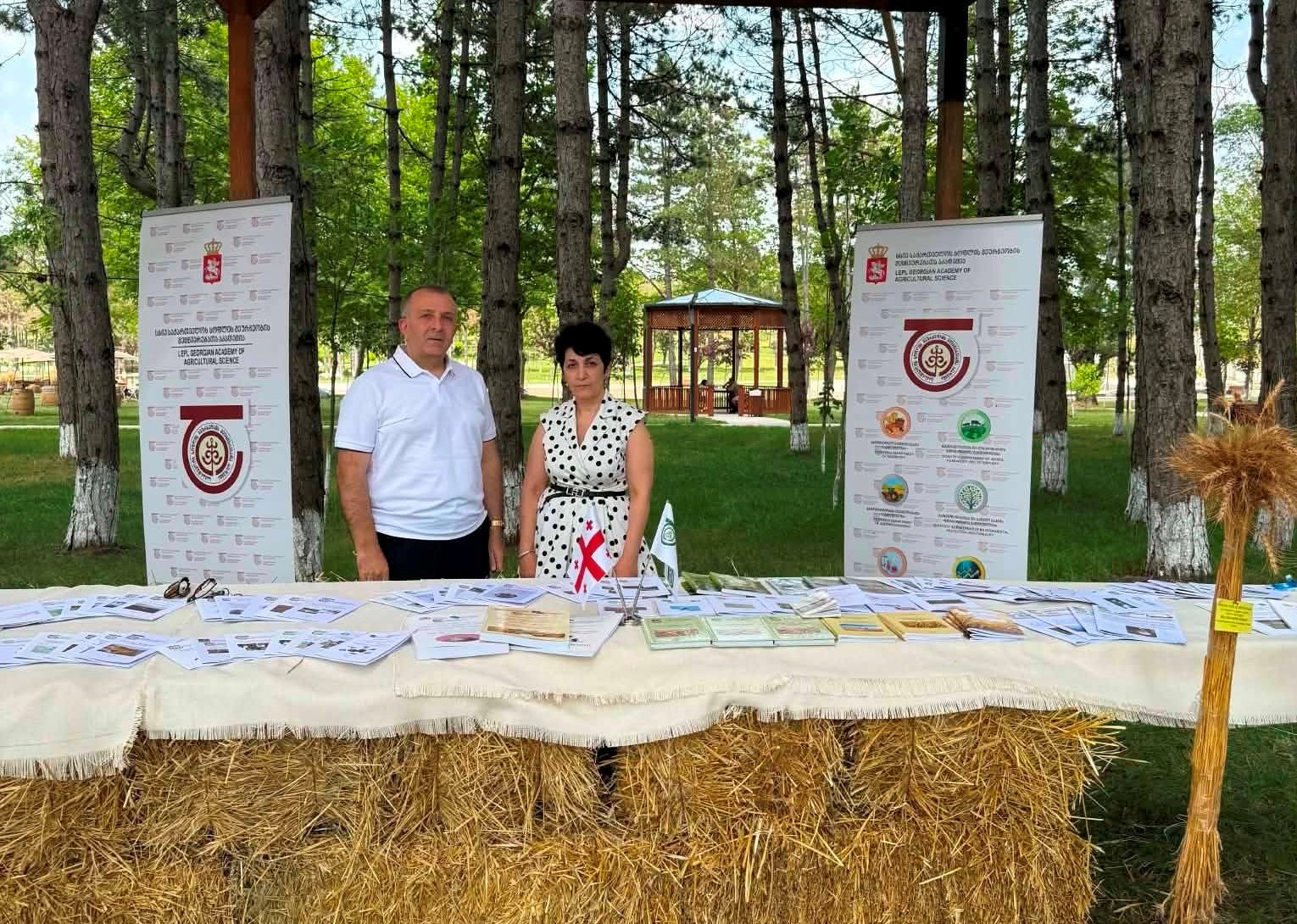
The Academy presented an extensive exhibition at the "Alooba 2026" festival, offering visitors the opportunity to explore various intellectual resources produced by the Academy, including monographs, books, brochures, recommendations, collections of scientific papers, and other publications. Particular interest was generated by publications released in 2026 that discuss endemic species and local varieties of Georgian wheat—covering their biological characteristics, modern cultivation technologies, and measures for combating diseases and pests, as well as the genetic and cultural significance of Georgian wheat—alongside scientific publications focused on agrobiodiversity.
The festival was attended by the Speaker of the Parliament of Georgia, Shalva Papuashvili; Deputy Speaker Nino Tsilosani; the Minister of Environmental Protection and Agriculture, Davit Songhulashvili; the Mayor of Dedoplistskaro Municipality, Nikoloz Janiashvili; representatives of the executive and legislative branches; members of scientific and academic circles; farmers; private sector representatives; and numerous citizens interested in the culture of Georgian wheat.
Visitors toured the exhibition space of the Georgian Academy of Agricultural Sciences with great interest, examined the displayed publications, highly valued their scientific and practical significance, and paid special attention to the Academy’s long-standing efforts regarding the conservation, research, and promotion of Georgian wheat.
International Day to Combat Deforestation and Draughts
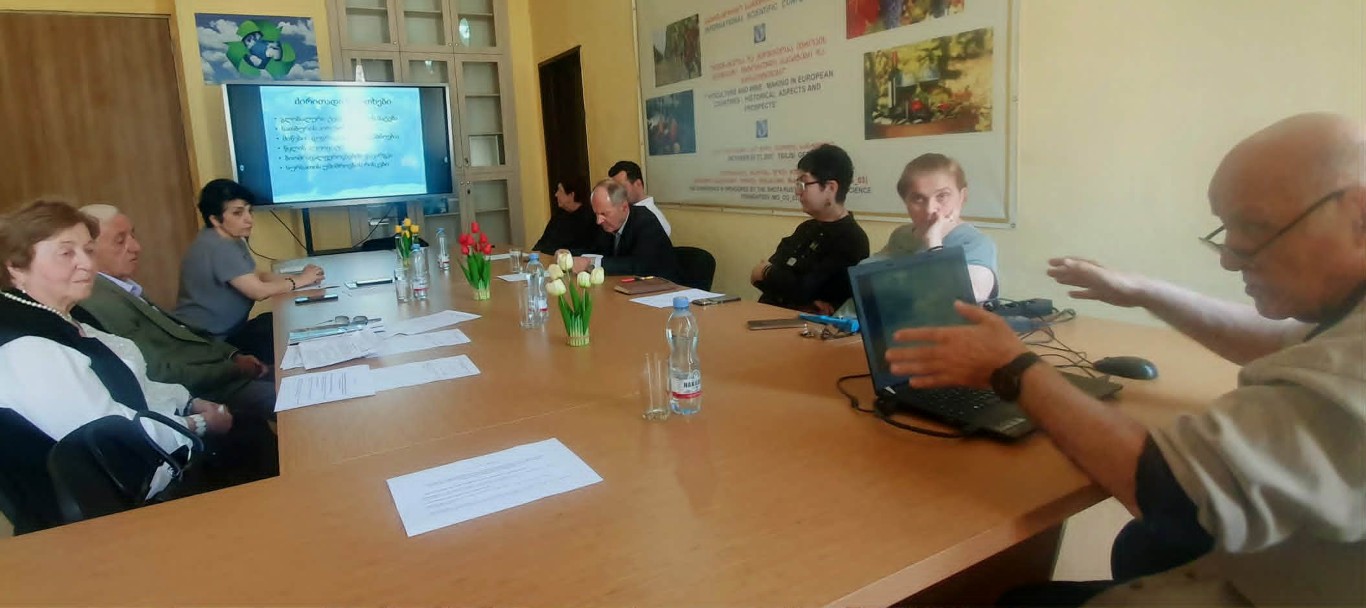 It has become a tradition at the Department of Agronomic Sciences of the Georgian Academy of Agricultural Sciences to hold a round table or thematic session on June 17 — the International Day to Combat Desertification and Drought. This year was no exception. The round table was held, at which the following reports were presented:
“Problems of Desertification and Land Degradation in Georgia” — Speaker: Academician-Secretary of the Department of Agronomic Sciences, Academician Gogola Margvelashvili;
“Climate Change and Desertification” — Speaker: Corresponding Member of the Academy Gizo Gogichaishvili.
The round table was opened by Academician-Secretary of the Department of Agronomic Sciences, Academician Gogola Margvelashvili. After a short greeting, she spoke about the relevance and importance of the issue under discussion. It was noted that, according to the UN General Assembly, about a quarter of the Earth's land area is at risk of becoming a desert, which is very worrying and thought-provoking.
As for Georgia, despite the fact that the country is not located in the immediate vicinity of a desert zone, in the context of global warming, in its eastern part, in certain regions, under conditions of long and systematic droughts,the threat of local desertification may actually arise. This can become a significant problem for such a small-land country as Georgia, where there is only 0.14 hectares of arable land per capita.
In her report “Problems of Desertification and Land Degradation in Georgia,” Professor Gogola Margvelashvili drew attention to the fact that currently approximately 3,000 km² of land in Georgia is experiencing desertification, mainly in the Shiraki, Eldari, Taribana and other territories.